Three methods - 4 min read
Cash Stuffing Without the Cash: The Envelope System for a Card-Only World
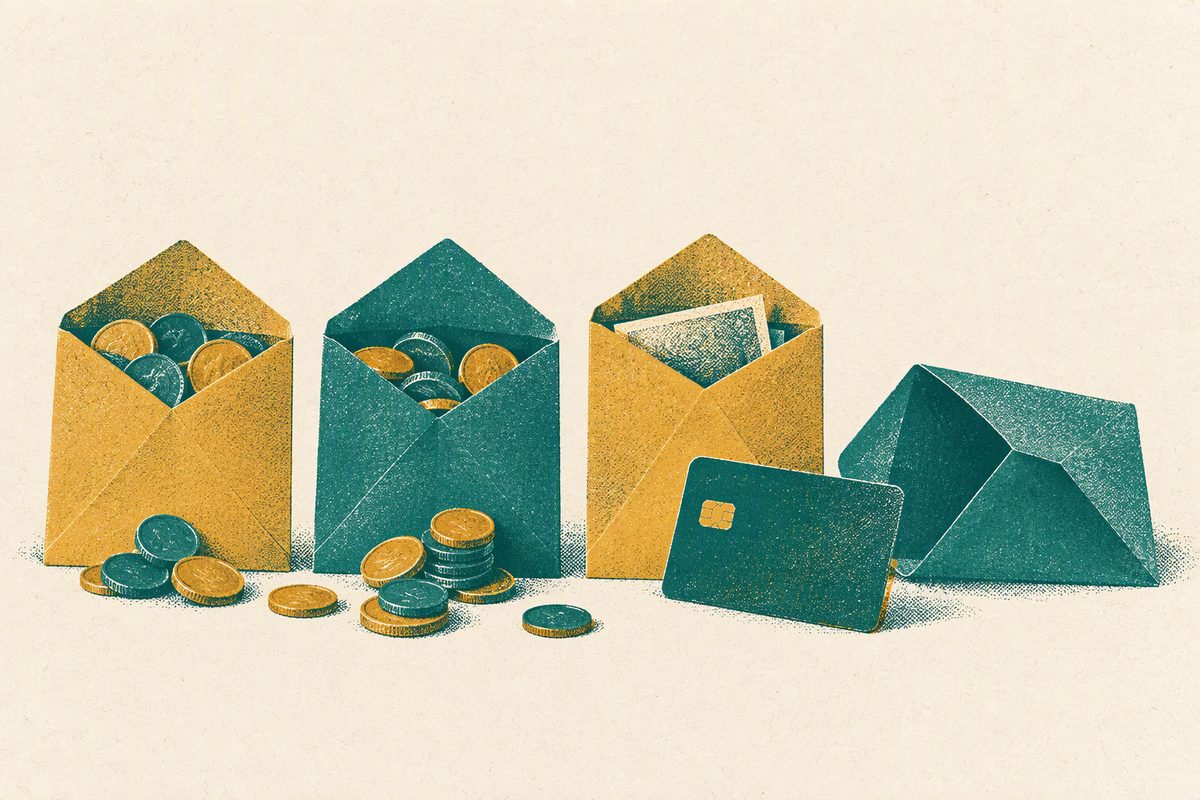
Cash stuffing was never about the paper. It was about making a spending limit visible before the purchase rather than after it. The paper happened to work. But three other methods work as well, and two of them do not require a trip to the bank.
The rule underneath the method
Spending stops when the allocation runs out. That is the entire mechanism. Cash works because the stack is finite and you can watch it shrink - it is not the paper that makes the method effective, so anything that keeps the finite-and-visible property will work as well without it.
Three methods follow. Each one keeps the boundary visible. Each one works with a card in your pocket. Pick the one that fits how you already move money.
Method one: one account per category
Open two or three checking accounts at the same bank. Most banks let you open additional accounts online in about five minutes, with no minimum balance and no fee. Label them: one for groceries and household, one for gas and transport, one for everything else. Set up your paycheck to land in the main account, then transfer the budgeted amount into each sub-account on the day you get paid.
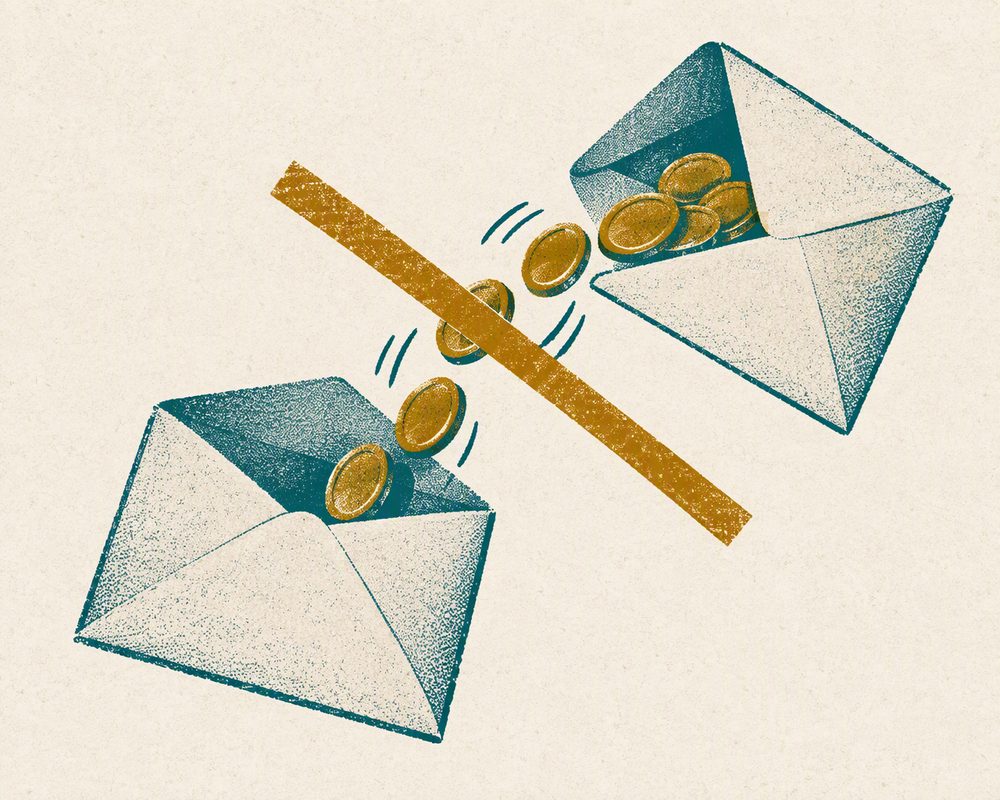
The sub-accounts are the envelopes. When the groceries account hits zero on the nineteenth, groceries stop until the first of next month. You can check the balance in the app before you swipe the card, which is the same as counting the cash in the envelope before you walk into the store.
The weakness: most debit cards let you pick which account to charge, and if you forget to switch, the purchase comes out of the main account and the boundary is gone. The fix is to leave the main account card at home and carry only the sub-account card for that category, or to use the app to check the balance before every swipe until the habit lands.
Method two: app-based envelopes
Several banks and credit unions now offer "buckets" or "goals" inside a single checking account. You create labeled buckets - Groceries, Gas, Eating Out - and move money into them on payday. The bank tracks the balance in each bucket, and when you swipe the card you can choose which bucket to charge.
The advantage over method one: everything lives in a single account, so there is no transfer step and no risk of charging the wrong card. The disadvantage: not every bank offers buckets, and the ones that do often limit you to five or six, which is enough for the big categories but not for every line in a detailed budget.
If your bank does not offer buckets, two apps do the same job on top of whatever bank you already have. They link to your account, read the transactions, and let you assign each one to a category with a spending limit. The app is the envelope; the bank account is the cash.
Method three: the prepaid card envelope
Buy a prepaid Visa or Mastercard for each spending category. Load the budgeted amount onto the card on payday. Use that card for that category only. When the card declines, the category is closed for the month.
This is the closest to actual cash stuffing, because the card has a hard limit that cannot be overspent. It is also the most expensive method: prepaid cards charge activation fees, monthly fees, and sometimes per-transaction fees. Read the fee schedule before you buy three of them.
The method works best for one or two categories where you have a history of overspending, not for the whole budget. A single prepaid card for "eating out" with $150 loaded on it is a boundary you cannot argue with; five prepaid cards for five categories is a wallet full of fees.
Which method to pick
If your bank offers buckets and you can live with five or six categories, method two is the least friction. If your bank does not offer buckets but lets you open additional checking accounts for free, method one scales to as many categories as you need. If you have one category that consistently blows past its budget and you need a hard wall, method three on that one category is worth the fee.
None of the three methods requires cash. All three require the same discipline: move the money on payday, spend only from the envelope, and stop when it is empty. The paper envelopes were never the point. The boundary was.
Want it already laid out? The 52-Week Savings Challenge printable is 78 undated pages: a weekly tracker you stack, four quarterly reviews, streak checks with a "what I skipped" prompt instead of a blank week, and milestone and finish-line pages built around a $2,600 target. $9.99, delivered to your inbox the moment it is bought.
See the printableRead next: the envelope system without cash and zero-based budgeting vs the 50/30/20 rule, or all guides. General guidance, not personalised advice. Corrections go to info@88away.com.